Safe Travels: Navigating Europe's High-Speed Rail Networks
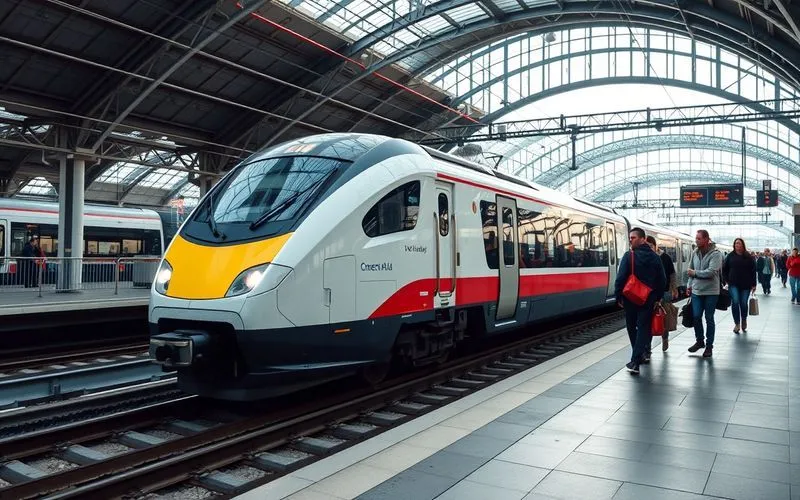
Europe's high-speed rail network is one of the continent's greatest achievements. From the French TGV hurtling through the countryside at 320 km/h to the Eurostar gliding beneath the English Channel, these trains connect major cities with speed, comfort, and an environmental footprint far smaller than air travel. In 2025, European high-speed rail carried over 180 million passengers across more than 12,000 kilometres of dedicated high-speed track, and the network continues to expand with new lines under construction in Poland, the Baltics, and Portugal.
High-speed trains are among the safest forms of transport in the world. The European Railway Agency (ERA) reports that rail travel in the EU is approximately 20 times safer than car travel per passenger-kilometre. Fatal accidents on high-speed services are extraordinarily rare. Yet safety awareness remains essential, whether you are a daily commuter on the Thalys between Brussels and Amsterdam or a first-time tourist boarding the Frecciarossa from Rome to Florence.
This guide covers everything you need to know about staying safe on Europe's premier rail services, from platform awareness and luggage security to emergency procedures and travel insurance.
Europe's Major High-Speed Networks at a Glance
Understanding the different operators and their services helps you prepare appropriately for each journey.
TGV (France) and SNCF Services
France pioneered European high-speed rail with the TGV (Train a Grande Vitesse) in 1981, and the network remains one of the most extensive. The latest generation, the TGV M (also marketed as inOui), entered service in 2024 with enhanced safety features including improved crashworthiness, automatic fire detection, and upgraded CCTV coverage in all carriages. TGV services connect Paris to Lyon, Marseille, Bordeaux, Strasbourg, and many other cities at speeds up to 320 km/h.
SNCF also operates the Ouigo low-cost high-speed service, which uses older TGV trainsets but at significantly lower fares. Safety standards are identical across both services, though Ouigo trains typically have higher occupancy rates, which can mean more crowded conditions and greater attention needed for personal belongings.
ICE (Germany)
Deutsche Bahn's ICE (InterCity Express) network covers Germany extensively and extends into neighbouring countries including Austria, Switzerland, the Netherlands, Belgium, and France. The newest ICE 3neo trains feature modern safety systems including ETCS Level 2 signalling (European Train Control System), which provides continuous cab signalling and automatic train protection. ICE trains operate at up to 300 km/h on dedicated high-speed sections.
Eurostar
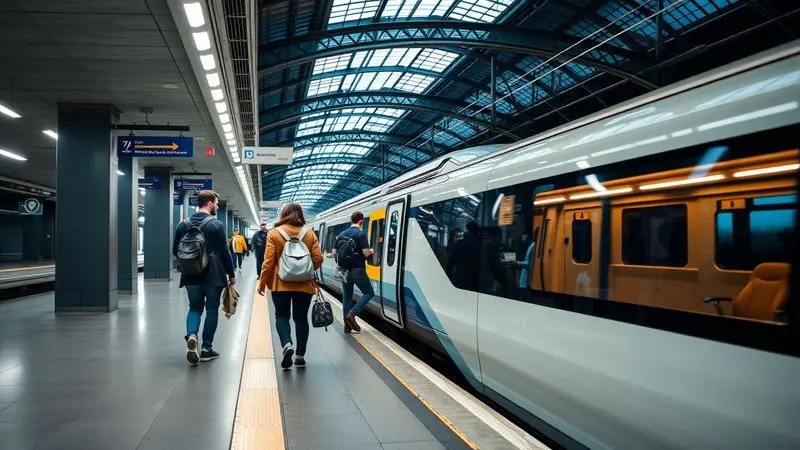
Eurostar connects London with Paris, Brussels, Amsterdam, and seasonal destinations via the Channel Tunnel. It is unique among European high-speed services in requiring airport-style security screening before boarding, including bag X-ray scans and metal detectors. This reflects both the border-crossing nature of the service and the heightened security requirements for the Channel Tunnel. Eurostar's e320 trains (based on the Siemens Velaro platform) reach 320 km/h on the high-speed lines in France and Belgium.
AVE (Spain)
Spain's AVE (Alta Velocidad Espanola) network, operated by Renfe, is the longest high-speed rail network in Europe and the second longest in the world after China's. Madrid-Barcelona, Madrid-Seville, and Madrid-Valencia are among the busiest routes. AVE services include mandatory bag screening at major stations, a security measure introduced following the 2004 Madrid train bombings. Trains reach speeds of up to 310 km/h.
Frecciarossa (Italy)
Trenitalia's Frecciarossa 1000 (marketed as the ETR 1000) is among the most modern high-speed trains in Europe, capable of 360 km/h though typically operating at up to 300 km/h. The Rome-Milan route is the flagship service, with departures every 15-30 minutes during peak hours. Italy also has a private high-speed competitor, Italo (operated by NTV), running the same routes with Alstom AGV trainsets.
Platform Safety: Before You Board
Most safety incidents on European railways occur on platforms and at stations, not on the trains themselves. Awareness and preparation are your best tools.
- Mind the platform edge. High-speed trains create significant air displacement as they pass through stations. The yellow safety line marked on every European platform exists for good reason. Stay behind it until the train has come to a complete stop. At stations where non-stopping trains pass through, warning announcements and sometimes barriers are in place, but personal vigilance is essential.
- Know your platform and car number. European stations display departure boards showing which platform (voie, Gleis, binario, via) your train departs from, usually 15-20 minutes before departure. Many services also indicate the coach layout on platform displays, allowing you to position yourself near your assigned car. This reduces the need to rush along crowded platforms.
- Watch for uneven surfaces. Historic European stations, particularly terminal stations like Paris Gare du Nord, Milano Centrale, and Frankfurt Hauptbahnhof, can have uneven platform surfaces, narrow gaps between platform and train, and steep steps. Assistance is available at all major stations for passengers with reduced mobility; request it when booking or through the station's assistance service.
- Be aware of your surroundings. Major rail stations in European cities are, unfortunately, hotspots for pickpockets. Paris Gare du Nord, Barcelona Sants, Roma Termini, and Milan Centrale are particularly notorious. Keep valuables in front-body bags or secure pockets, and be especially alert during the boarding rush when crowds are dense and attention is divided.
Onboard Security and Personal Safety
Once aboard, high-speed trains offer a safe and controlled environment, but basic precautions remain important.
Luggage Security
Theft from luggage racks is the most commonly reported crime on European high-speed trains. Most trains have overhead racks above seats and designated luggage areas at the ends of carriages. The end-of-carriage areas are convenient for large bags but are often out of direct sight. Practical steps to secure your luggage:
- Use a luggage lock or cable lock to secure bags in overhead or end-of-carriage racks. A simple cable lock that loops through bag handles and around the rack is lightweight and effective.
- Keep valuables (passport, wallet, electronics, medication) in a day bag that stays with you at your seat, never in the luggage rack.
- If travelling alone, choose a seat near the luggage area if your bag is stored there, so you can keep an eye on it.
- On overnight services and at terminal stations, be particularly vigilant as thieves often target bags in the minutes before departure when passengers are distracted.
Onboard Staff and Assistance
All European high-speed services have onboard staff, including a train manager (chef de bord, Zugchef, capotreno) and typically one or more ticket inspectors. On some services, dedicated security staff or railway police also patrol. If you feel unsafe for any reason, approach onboard staff immediately. SNCF trains in France carry the SNCF Surete security team; Deutsche Bahn has the DB Sicherheit division; and Eurostar has dedicated security personnel.
Emergency number on trains: In addition to speaking to staff, you can reach rail emergency services by calling 112 (the EU-wide emergency number) from any mobile phone. Many newer trains also have emergency intercoms or buttons in vestibule areas and toilets.
Emergency Procedures: What to Know
While emergencies on high-speed trains are exceptionally rare, knowing the basics can make a critical difference.
- Emergency brake: Every carriage has an emergency brake handle (usually red, behind a glass panel or cover). Use it only in genuine emergencies, as activating it on a high-speed line can create dangerous situations. In most cases, contacting staff via the intercom is preferred unless there is an immediate threat to life.
- Emergency exits: High-speed trains have clearly marked emergency exits. Window exits are equipped with hammers to break the glass in an emergency. Familiarise yourself with the nearest exit when you take your seat.
- Fire safety: Modern high-speed trains are built with fire-resistant materials and have automatic fire detection systems. If you smell smoke or see fire, alert staff immediately and move away from the affected area. Do not attempt to fight a fire unless a suitable extinguisher is readily available and you are confident in its use.
- Medical emergencies: Train staff carry basic first aid equipment and can radio ahead for medical assistance at the next station. If someone experiences a medical emergency, alert staff immediately. Many European trains have defibrillators (AEDs) onboard.
- Evacuation: In the rare event of evacuation, follow crew instructions precisely. Never exit a train onto the tracks unless explicitly directed to do so, as adjacent lines may carry trains at high speed. Wait for confirmation that all lines are safe.
Night Trains: The Renaissance and Safety Considerations
Night trains are experiencing a remarkable revival across Europe. The Nightjet service operated by Austrian Federal Railways (OBB) now connects Vienna, Munich, and Zurich to destinations including Rome, Venice, Brussels, Amsterdam, Paris, and Barcelona. European Sleeper runs Brussels to Berlin, and new operators continue to announce routes.
Safety on night trains requires additional considerations. In sleeper compartments and couchettes, always lock your compartment door from the inside using the provided latch and security chain. Store valuables under your pillow or in a secure pouch attached to your body. In seated carriages on overnight services, remain especially vigilant as theft risk increases when passengers are sleeping.
The newest Nightjet trains, which entered service in 2024, feature electronic locking on compartment doors, CCTV in corridors, and improved lighting. Solo travellers, particularly women travelling alone, can book female-only compartments on many Nightjet routes.
Cross-Border Travel: Documents and Regulations
One of the joys of European rail is the ease of crossing borders. Within the Schengen Area, there are typically no border checks on trains. However, temporary border controls are sometimes reintroduced, and random checks do occur. Always carry valid identification:
- EU/EEA citizens: A valid national ID card or passport is sufficient for all cross-border rail travel within Europe.
- Non-EU citizens: Carry your passport with valid visa or residence permit at all times. Eurostar requires passport presentation before boarding for all passengers.
- Switzerland and Norway: Both are in Schengen but not in the EU. Travel is seamless from a border perspective, but customs rules differ. Duty-free limits apply when crossing into or out of Switzerland.
- UK connections: Post-Brexit, Eurostar journeys between the UK and EU require passport checks. The upcoming EU Entry/Exit System (EES) will introduce biometric checks for non-EU nationals entering the Schengen Area, potentially affecting boarding times at Eurostar terminals.
Travel Insurance for Rail Journeys
EU Regulation 2021/782 on rail passenger rights, fully applicable since June 2023, provides a baseline of protection for all rail passengers in the EU. Key provisions include:
- Compensation of 25% of the ticket price for delays of 60-119 minutes and 50% for delays of 120 minutes or more on long-distance services.
- Right to assistance (meals, refreshments, accommodation if necessary) during long delays.
- Right to rerouting or reimbursement if the service is cancelled or significantly delayed.
- Free assistance for passengers with disabilities or reduced mobility, with 24 hours advance notice.
Beyond regulatory protections, comprehensive travel insurance is strongly recommended for longer trips. A good policy should cover medical expenses abroad (even within the EU, the European Health Insurance Card has limitations), trip cancellation, lost or stolen luggage, and personal liability. Policies specifically designed for European rail travel are available from providers like Allianz Travel, AXA Assistance, and World Nomads, typically costing between 30-80 EUR for a two-week trip.
Practical Safety Checklist for European Rail Travel
- Download the relevant train operator's app (SNCF Connect, DB Navigator, Trenitalia, Renfe) for real-time platform and delay information.
- Arrive at the station at least 15-20 minutes before departure (30 minutes for Eurostar, 20 minutes for AVE with bag screening).
- Keep your ticket (paper or digital) easily accessible throughout the journey for inspection.
- Secure valuables in a personal bag at your seat; use a cable lock for luggage in racks.
- Note the emergency exit locations and intercom positions in your carriage.
- Carry valid ID and ensure your phone is charged for emergencies and navigation.
- Save the local emergency number (112 works across all EU countries) in your phone.
- Consider travel insurance, especially for multi-country itineraries.
- If travelling overnight, lock compartments and keep valuables secure on your person.
- Stay hydrated and carry basic supplies (water, snacks, medication) as buffet cars can be closed or sold out on busy services.
European high-speed rail travel is one of the safest, most efficient, and most enjoyable ways to explore the continent. With basic awareness and sensible precautions, you can focus on what matters most: the journey itself, whether that is watching the French countryside blur past your TGV window, emerging from the Channel Tunnel into English daylight, or pulling into Florence's Santa Maria Novella station with the Duomo waiting just outside.

Stay Informed
Get the latest safety insights delivered to your inbox.