Emergency Preparedness
Be ready for any situation -- from natural disasters to power outages. Practical plans, checklists, and essential knowledge for European families.
Building a 72-Hour Emergency Kit
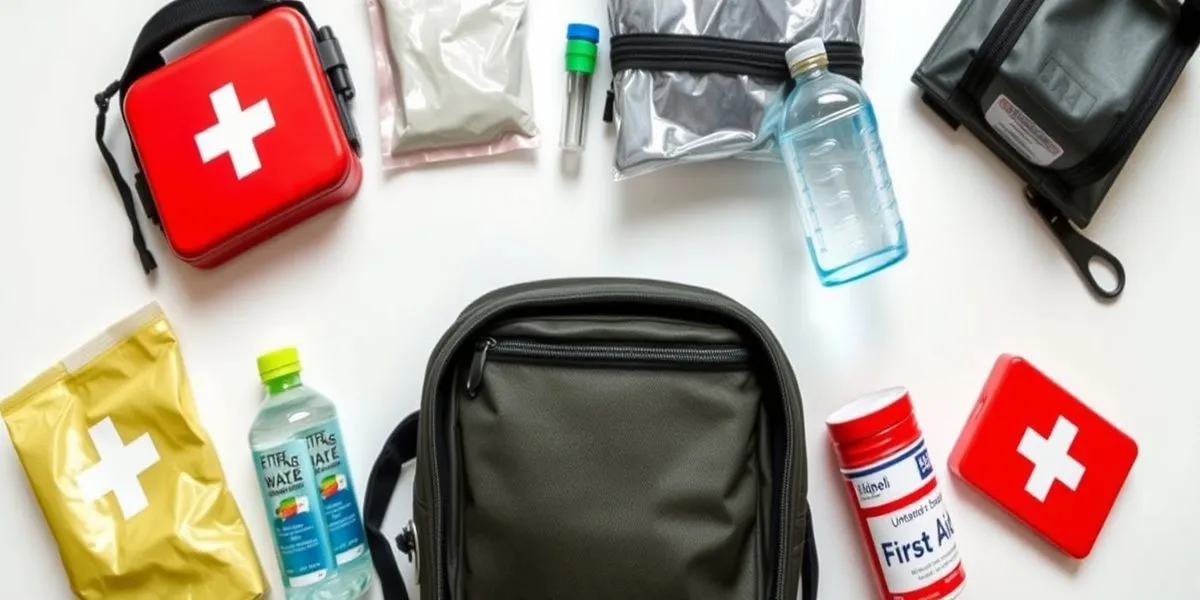
European civil protection agencies recommend every household maintain supplies for at least 72 hours of self-sufficiency. This gives emergency services time to reach affected areas and set up assistance. Here is a comprehensive, prioritized checklist for a family of four.
Water & Food
- checkWater: 2 litres per person per day = 24 litres for family of 4
- checkWater purification tablets (backup)
- checkNon-perishable food for 72 hours: tinned goods, dried fruit, energy bars, crackers
- checkManual tin opener
- checkBaby food/formula if applicable
- checkPet food if applicable
First Aid Kit
- checkAdhesive bandages (various sizes)
- checkSterile gauze pads and medical tape
- checkAntiseptic wipes and solution
- checkTriangular bandage and elastic bandage
- checkParacetamol, ibuprofen, antihistamines
- checkPrescription medications (7-day supply, rotated)
- checkScissors, tweezers, safety pins
- checkDisposable gloves and CPR face shield
Documents & Cash
- checkCopies of passports and ID cards (in waterproof bag)
- checkInsurance documents (home, health, car)
- checkEmergency contact list (printed)
- checkMedical information cards for all family members
- checkCash in small denominations (200 -- 300 EUR) -- ATMs may not work
- checkUSB drive with digital copies of all important documents
Tools & Equipment
- checkBattery-powered or hand-crank radio (for emergency broadcasts)
- checkTorch/flashlight with spare batteries
- checkUSB power bank (fully charged, 20,000+ mAh)
- checkMulti-tool or Swiss Army knife
- checkWhistle (for signaling)
- checkDuct tape and plastic sheeting
- checkWrench or pliers (to turn off utilities)
Clothing & Shelter
- checkChange of warm clothing per person
- checkWaterproof jacket and sturdy shoes
- checkEmergency thermal blankets (space blankets)
- checkSleeping bags or warm blankets
- checkRain poncho
Hygiene & Sanitation
- checkToilet paper and wet wipes
- checkHand sanitizer
- checkRubbish bags (heavy duty, can also serve as waterproofing)
- checkNappies and wipes (if applicable)
- checkToothbrush, toothpaste, soap
- checkMenstrual products
Tip: Maintain Your Kit
Set a calendar reminder every 6 months to check expiry dates on food, water, batteries, and medications. Rotate tinned food into your regular meals and replace. Update clothing sizes for growing children. Charge power banks quarterly. Store the kit in an accessible location that all family members know about.
Emergency Plan for Families
An emergency plan ensures every family member knows what to do, where to go, and who to contact when disaster strikes. Practice it twice a year -- once in summer and once in winter -- so it becomes second nature.
location_onMeeting Points
Establish three meeting points for different scenarios:
- looks_oneImmediate (house fire): The front letterbox, a specific tree, or the neighbor's driveway -- somewhere visible but safely away from the building.
- looks_twoNeighborhood (local emergency): A specific landmark within walking distance, such as a school, church, or community center.
- check_circleOut-of-area (evacuation): A relative's house, hotel, or campsite in a different region where the family would regroup if separated.
contact_phoneEmergency Contact Cards
Create laminated wallet cards for every family member, including children, containing:
- check_circleFamily members' phone numbers
- check_circleOut-of-area contact person (someone in a different city/country)
- check_circleHome address and meeting point locations
- check_circleMedical conditions and allergies
- check_circleBlood type
- check_circleInsurance policy numbers
eventPractice Drills
Fire Evacuation Drill
Practice getting out of every room in the house with two exits identified. Time it -- you should be able to evacuate in under 2 minutes. Practice at night with lights off.
Shelter-in-Place Drill
Identify the safest room in your home (interior, no windows). Practice moving there quickly with your emergency kit, sealing doors and windows if needed.
Communication Drill
Practice the "I'm safe" message chain: each family member contacts the out-of-area person to confirm safety. Test that everyone knows the numbers without their phone.
First Aid Essentials
Basic first aid knowledge can save lives. The following guidance provides an overview of critical skills, but it is not a substitute for hands-on training. We strongly recommend taking a certified first aid course through your national Red Cross or equivalent organization.
Important: This information is for educational purposes only and does not replace professional first aid training or medical advice. Always call 112 in an emergency.
monitor_heartCPR Basics (Adults)
- 1.Check safety and response: Ensure the scene is safe. Tap shoulders and shout. If no response, call 112 or ask someone else to call.
- 2.Open the airway: Tilt head back, lift chin. Look, listen, and feel for breathing for up to 10 seconds.
- 3.If not breathing normally: Begin chest compressions. Place heel of hand on centre of chest, other hand on top. Push hard and fast: 5 -- 6 cm deep, 100 -- 120 compressions per minute.
- 4.30 compressions, 2 rescue breaths: Pinch nose, seal mouth, blow for 1 second. Watch chest rise. Continue 30:2 ratio.
- 5.Use an AED if available: Turn on, follow voice prompts. Apply pads as shown. Do not touch the person during analysis/shock.
emergencyChoking Response
Adults and Children Over 1:
- 1.Encourage coughing if they can still breathe partially
- 2.Give up to 5 sharp back blows between shoulder blades
- 3.If unsuccessful, give up to 5 abdominal thrusts (Heimlich maneuver)
- 4.Alternate between back blows and abdominal thrusts
- 5.If unconscious, begin CPR and call 112
Babies Under 1:
- 1.Lay baby face-down along your forearm, supporting the head
- 2.Give 5 back blows between shoulder blades
- 3.Turn over, give 5 chest thrusts (2 fingers, centre of chest)
- 4.Never use abdominal thrusts on a baby
bloodtypeSevere Bleeding Control
- 1.Apply direct pressure with a clean cloth or dressing. Press firmly and continuously.
- 2.Call 112 or have someone call while you maintain pressure.
- 3.Do not remove the first dressing if it soaks through -- add more on top.
- 4.Elevate the injured limb above heart level if possible.
- 5.Treat for shock: Lay person down, elevate legs, keep warm. Do not give food or drink.
local_fire_departmentBurns Treatment
- 1.Cool the burn under cool (not cold) running water for at least 20 minutes. This is the single most important step.
- 2.Remove jewellery and clothing near the burn (unless stuck to the skin).
- 3.Cover with cling film loosely laid over the burn (not wrapped around a limb) or a clean, non-fluffy dressing.
- 4.Never apply: butter, toothpaste, ice, or adhesive dressings to a burn.
- 5.Seek medical help for burns larger than a credit card, on the face/hands/joints, or if blisters form.
Natural Disaster Preparedness by Region
Europe faces distinct natural hazards depending on the region. Understanding your local risks and preparing accordingly is essential. Climate change is increasing the frequency and severity of extreme weather events across the continent.
Flooding (Northern & Western Europe)
Risk areas: Netherlands, Belgium, Germany (Rhine/Elbe), UK, Northern France, Scandinavia (spring melt)
- checkKnow your flood risk zone (check EU Flood Directive maps)
- checkStore sandbags and flood barriers if in a risk zone
- checkMove valuables and electrical equipment upstairs
- checkNever drive through floodwater -- 30 cm can move a car
Earthquakes (Mediterranean)
Risk areas: Italy, Greece, Turkey, Croatia, Romania, Southern Spain, Portugal
- checkDrop, Cover, Hold On -- get under sturdy furniture
- checkSecure heavy items to walls (bookcases, water heaters)
- checkKnow how to turn off gas supply
- checkAftershocks can follow for days -- stay alert
Severe Storms (Central Europe)
Risk areas: Germany, Poland, Czech Republic, Austria, France (all regions can experience severe convective storms)
- checkMonitor weather warnings via METEOALARM.eu
- checkMove to interior rooms during tornado warnings
- checkSecure outdoor furniture and trampolines
- checkStay away from windows during hailstorms
Wildfires (Southern Europe)
Risk areas: Portugal, Spain, Southern France, Italy, Greece, Croatia
- checkCreate defensible space: clear vegetation 30 m from buildings
- checkKnow your evacuation route and have your go-bag ready
- checkClose all windows and shutters if fire approaches
- checkEvacuate early -- do not wait for official orders if you feel unsafe
Extreme Cold (Northern & Eastern Europe)
Risk areas: Scandinavia, Baltics, Finland, Poland, Romania, mountain regions
- checkInsulate pipes to prevent freezing and bursting
- checkKeep emergency heating source (ensure ventilation for fuel-burning heaters)
- checkKeep vehicles winterized with emergency kit in boot
- checkRecognize hypothermia signs: shivering, confusion, drowsiness
Heat Waves (All of Europe)
Risk areas: Increasingly all of Europe, particularly Mediterranean, but Northern Europe is poorly adapted
- checkDrink 2 -- 3 litres of water daily, even if not thirsty
- checkStay indoors during peak heat (12:00 -- 16:00)
- checkCheck on elderly neighbors -- heat-related deaths primarily affect over-65s
- checkNever leave children or pets in parked cars
Power Outage Preparation
Extended power outages can occur during storms, grid failures, or infrastructure attacks. Being prepared means maintaining comfort and safety when electricity, heating, and digital services are unavailable.
battery_charging_fullBackup Power
- checkUSB power banks for phones (20,000+ mAh keeps a phone charged for days)
- checkSolar charger for extended outages
- checkPortable power station (500 -- 1000 Wh) for essential devices
- checkBattery-powered or hand-crank radio for emergency broadcasts
kitchenFood Preservation
- checkKeep fridge and freezer doors closed -- food stays safe for 4 hours (fridge) or 24 -- 48 hours (full freezer)
- checkUse perishables first, then frozen, then tinned food
- checkA camping stove (used outdoors only) can heat food
- checkWhen in doubt, throw it out -- food poisoning is a serious risk
thermostatHeating
- checkGather family in one room and close doors to retain heat
- checkLayer clothing and use sleeping bags
- checkNever use gas stoves, barbecues, or generators indoors (carbon monoxide risk)
- checkIf using a fireplace, ensure chimney is clear and flue is open
Emergency Communication & EU Civil Protection
When phone networks are overloaded during emergencies, alternative communication strategies become critical. The EU Civil Protection Mechanism coordinates assistance between member states during major disasters.
smsWhen Phones Do Not Work
- check_circleText messages work when calls fail: SMS uses less bandwidth and can queue for delivery
- check_circleUse an out-of-area contact: Local networks may be congested, but long-distance calls may go through
- check_circleSocial media check-in features: Facebook Safety Check, WhatsApp status updates use minimal data
- check_circleBattery-powered radio: Official emergency broadcasts provide critical information
- check_circlePhysical meeting points: When all else fails, go to your pre-arranged family meeting point
shieldEU Civil Protection Mechanism
The EU Civil Protection Mechanism (UCPM) coordinates emergency response across member states and participating countries. When a disaster overwhelms a country's capacity:
- check_circleThe affected country requests assistance through the Emergency Response Coordination Centre (ERCC) in Brussels
- check_circleMember states voluntarily provide resources: rescue teams, medical supplies, shelter, water purification
- check_circleThe EU covers at least 75% of transport costs for deployed assistance
- check_circleThe rescEU reserve includes firefighting planes, medical stockpiles, and CBRN detection equipment
Emergency Numbers by Country
While 112 works in all EU countries, many nations maintain additional service-specific numbers. Save the numbers for countries you visit frequently.
| Country | General Emergency | Police | Fire | Ambulance |
|---|---|---|---|---|
| Austria | 112 | 133 | 122 | 144 |
| Belgium | 112 | 101 | 112 | 112 |
| Czech Republic | 112 | 158 | 150 | 155 |
| Denmark | 112 | 114 | 112 | 112 |
| Finland | 112 | 112 | 112 | 112 |
| France | 112 | 17 | 18 | 15 |
| Germany | 112 | 110 | 112 | 112 |
| Greece | 112 | 100 | 199 | 166 |
| Ireland | 112 / 999 | 112 / 999 | 112 / 999 | 112 / 999 |
| Italy | 112 | 113 | 115 | 118 |
| Netherlands | 112 | 0900-8844 | 112 | 112 |
| Poland | 112 | 997 | 998 | 999 |
| Portugal | 112 | 112 | 112 | 112 |
| Spain | 112 | 091 / 062 | 080 | 061 |
| Sweden | 112 | 114 14 | 112 | 112 |
| Switzerland | 112 | 117 | 118 | 144 |
info112 works from any phone (including locked phones and phones without a SIM card) in all EU/EEA countries. Operators speak English in addition to local languages.
Related Safety Topics
Child Safety
Protect children during emergencies with age-appropriate safety education and childproofing strategies.
health_and_safetyHealth & Wellness
Access healthcare across Europe with EHIC cards, learn medication safety, and find mental health resources.
account_balanceFinancial Security
Secure financial documents, understand insurance coverage, and protect assets during emergencies.
Be Prepared, Not Scared
Get seasonal preparedness reminders, emergency planning tips, and safety alerts for your region.
No spam. Unsubscribe anytime. We respect your privacy under GDPR.