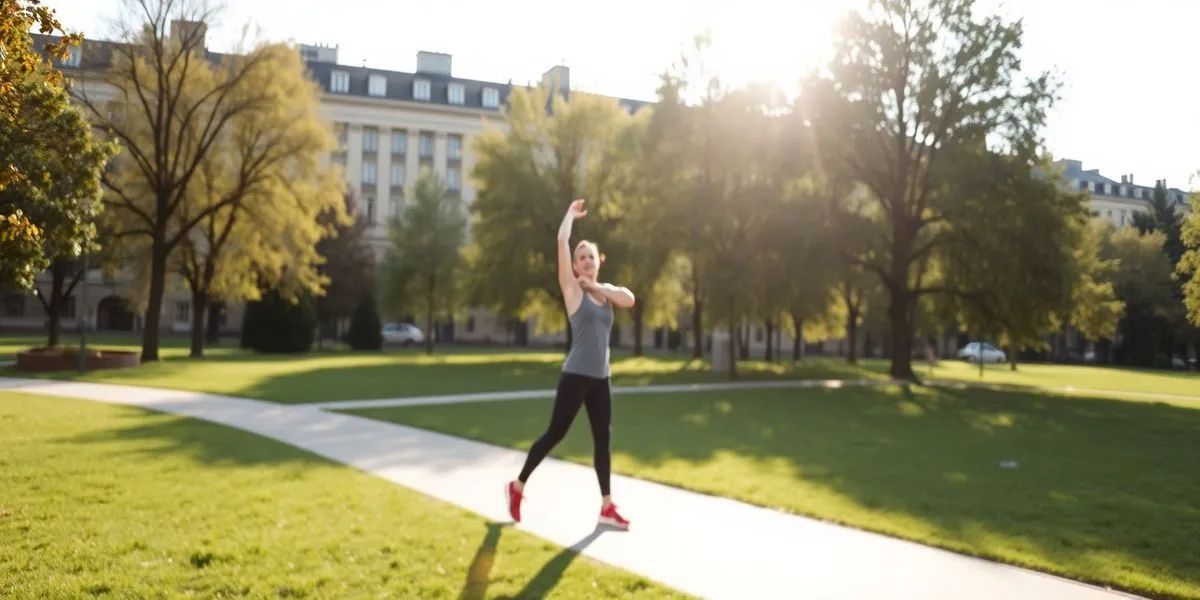
Health & Wellness Safety
Staying healthy and safe across Europe -- from healthcare access and workplace wellbeing to food safety and environmental health.
European Health Insurance Card (EHIC/GHIC)
The EHIC gives EU/EEA citizens access to state-provided healthcare during temporary stays in another member state, under the same conditions and at the same cost as locals. It is not a substitute for travel insurance, but it is an essential document for any trip within Europe.
How to Get One
- checkApply through your national health insurance authority
- checkFree of charge in all EU/EEA countries
- checkProcessing typically takes 7 -- 10 working days
- checkValid for up to 5 years (varies by country)
- checkEach family member needs their own card, including children
What It Covers
- checkEmergency medical treatment
- checkMedically necessary care during your stay
- checkTreatment of chronic or pre-existing conditions
- checkPregnancy and childbirth
- checkRoutine kidney dialysis (with pre-arrangement)
What It Does Not Cover
- closePrivate healthcare providers
- closeMedical repatriation (flights home)
- closePlanned medical treatment abroad
- closeMountain rescue or helicopter evacuation
- closeDental treatment (except emergency)
Tip: EHIC Is Not Travel Insurance
The EHIC covers state healthcare at local rates, which may still involve co-payments that can be significant in some countries (e.g., France requires 20 -- 30% patient contribution). It does not cover repatriation, lost luggage, or trip cancellation. Always carry both your EHIC and comprehensive travel insurance when travelling in Europe.
Workplace Ergonomics
The EU Directive 90/270/EEC on display screen equipment requires employers to ensure workstations meet minimum ergonomic standards. Whether you work in an office or from home, proper setup prevents musculoskeletal disorders, eye strain, and repetitive strain injuries.
chairDesk Setup Guide
- check_circleChair height: Adjust so your feet are flat on the floor and thighs are parallel to the ground. Seat height typically 40 -- 52 cm.
- check_circleDesk height: Elbows at 90 degrees when typing. Standard desk height is 72 -- 75 cm; adjustable standing desks are ideal.
- check_circleMonitor distance: 50 -- 70 cm from your eyes (roughly an arm's length). Top of screen at or slightly below eye level.
- check_circleMonitor angle: Tilted back 10 -- 20 degrees to reduce glare and neck strain.
- check_circleKeyboard and mouse: At elbow height, wrists neutral (not bent up or down). Consider a split keyboard for heavy typists.
self_improvementHealthy Habits
- check_circle20-20-20 rule: Every 20 minutes, look at something 20 feet (6 metres) away for 20 seconds to reduce eye strain.
- check_circleMovement breaks: Stand and move for 5 -- 10 minutes every hour. EU guidance recommends regular breaks from screen work.
- check_circleStretching: Neck rolls, shoulder shrugs, wrist circles, and hamstring stretches throughout the day.
- check_circleHydration: Keep water at your desk. Dehydration increases fatigue and reduces concentration.
- check_circleLighting: Natural light from the side (not behind or in front of the screen). Task lighting for documents.
Workplace Health Statistics
Musculoskeletal disorders (MSDs) account for 60% of all work-related health problems in the EU, according to the European Agency for Safety and Health at Work (EU-OSHA). Proper ergonomic setup can reduce the risk of developing MSDs by up to 60% and is a legal requirement for employers under EU directives.
Mental Health Resources
Mental health is increasingly recognized as a public health priority across Europe. The EU's Comprehensive Approach to Mental Health, adopted in 2023, calls for integrated, accessible mental health services in all member states. If you or someone you know is struggling, help is available.
EU-Wide & International Helplines
| Service | Number | Coverage |
|---|---|---|
| EU Emergency | 112 | All EU countries |
| Child Helpline | 116 111 | Most EU countries |
| Emotional Support | 116 123 | Available in many EU states |
| Missing Children | 116 000 | All EU countries |
| Crisis Text Line | Text HOME to local number | Varies by country |
Country-Specific Mental Health Services
- arrow_rightGermany: Telefonseelsorge (0800 111 0 111 / 0800 111 0 222) -- free, anonymous, 24/7
- arrow_rightFrance: SOS Amitie (09 72 39 40 50) -- 24/7 emotional support
- arrow_rightSpain: Telefono de la Esperanza (717 003 717) -- 24/7 crisis support
- arrow_rightNetherlands: 113 Zelfmoordpreventie (0900 0113) -- suicide prevention
- arrow_rightItaly: Telefono Amico (02 2327 2327) -- emotional support
- arrow_rightSweden: Mind Sjalvmordslinjen (90101) -- suicide prevention helpline
You Are Not Alone
One in six people across the EU experiences a mental health problem in any given week. Seeking help is a sign of strength, not weakness. Most EU countries offer free or subsidized psychological support through their national health systems. Ask your GP for a referral, or contact the helplines above for immediate support.
Food Safety in the EU
The EU has one of the world's most comprehensive food safety systems, overseen by the European Food Safety Authority (EFSA). From farm to fork, regulations cover labeling, allergens, additives, pesticide residues, and hygiene standards.
labelLabeling Requirements
EU Regulation 1169/2011 requires all pre-packaged food to display:
- checkFull ingredient list in descending order of weight
- checkNutritional information per 100g/ml
- checkCountry of origin for certain products
- checkUse-by or best-before dates
- checkStorage and preparation instructions
warningAllergen Laws
EU law identifies 14 major allergens that must be clearly highlighted on packaging and communicated in restaurants:
- Celery, Cereals (gluten), Crustaceans, Eggs
- Fish, Lupin, Milk, Molluscs
- Mustard, Nuts (tree nuts), Peanuts, Sesame
- Soybeans, Sulphur dioxide (sulphites)
Restaurants must provide allergen information, either in writing or verbally upon request.
kitchenSafe Food Handling
The WHO's four key principles of food safety:
- checkClean: Wash hands for 20 seconds before handling food
- checkSeparate: Use different chopping boards for raw meat and vegetables
- checkCook: Ensure core temperatures reach 75 degrees C for poultry
- checkChill: Refrigerate at 5 degrees C or below within 2 hours of cooking
Air Quality & Environmental Health
Air pollution causes an estimated 300,000 premature deaths annually in the EU. The EU Ambient Air Quality Directive sets limits for key pollutants, and the European Environment Agency provides real-time air quality data across the continent.
EU Air Quality Standards
| Pollutant | EU Limit | WHO Guideline |
|---|---|---|
| PM2.5 (annual) | 25 ug/m3 | 5 ug/m3 |
| PM10 (annual) | 40 ug/m3 | 15 ug/m3 |
| NO2 (annual) | 40 ug/m3 | 10 ug/m3 |
| O3 (8-hour) | 120 ug/m3 | 100 ug/m3 |
The EU is working to align its standards closer to WHO guidelines by 2030.
Protecting Yourself
- check_circleCheck the AQI daily: Use the European Air Quality Index (airindex.eea.europa.eu) to monitor your local air quality
- check_circleReduce outdoor exercise when AQI is moderate to poor (above 100)
- check_circleVentilate strategically: Open windows during early morning or after rain when pollution is typically lower
- check_circleUse HEPA air purifiers indoors during high-pollution days, especially if you have asthma or respiratory conditions
- check_circleChoose quieter streets for walking and cycling -- pollution drops significantly just one block from busy roads
Sun Safety
Skin cancer rates in Europe have been rising steadily, with over 100,000 new melanoma cases diagnosed annually across the EU. The vast majority are preventable through proper sun protection. Understanding the UV index is key to staying safe.
UV Index & Protection
| UV Index | Level | Protection Needed |
|---|---|---|
| 0 -- 2 | Low | Minimal protection needed |
| 3 -- 5 | Moderate | Sunscreen SPF 30+, hat, sunglasses |
| 6 -- 7 | High | SPF 50+, seek shade 11:00 -- 15:00 |
| 8 -- 10 | Very High | Avoid sun 11:00 -- 15:00, cover up |
| 11+ | Extreme | Stay indoors during peak hours |
Skin Cancer Prevention
- check_circleApply sunscreen 20 minutes before sun exposure and reapply every 2 hours (and after swimming)
- check_circleUse the EU-standard labeling: SPF (UVB) and the UVA circle logo for broad-spectrum protection
- check_circleCheck moles regularly using the ABCDE rule: Asymmetry, Border irregularity, Color variation, Diameter over 6 mm, Evolving shape
- check_circleNever use sunbeds -- they are classified as carcinogenic by WHO. Several EU countries have banned them for under-18s
- check_circleProtect children especially: severe sunburn in childhood doubles the lifetime risk of melanoma
Exercise Safety
The WHO recommends 150 -- 300 minutes of moderate aerobic activity per week for adults. Exercise is one of the most effective preventive health measures, but improper technique or overtraining can lead to injury.
Warm-Up Routine (10 min)
- 2 min light walking or marching in place
- 2 min arm circles and shoulder rolls
- 2 min leg swings (forward/back and side to side)
- 2 min bodyweight squats
- 2 min dynamic stretches (lunges, high knees)
Injury Prevention
- Increase training volume by no more than 10% per week
- Rest at least 1 -- 2 days per week
- Wear appropriate footwear for your activity
- Stay hydrated: 500 ml before, 150 -- 200 ml every 15 min during
- Listen to your body: sharp pain means stop immediately
Weather Considerations
- Heat: Avoid exercising outdoors above 35 degrees C. Exercise early morning or evening
- Cold: Layer clothing and protect extremities below 0 degrees C
- Humidity: High humidity impairs cooling. Reduce intensity above 70% humidity
- Pollution: Exercise indoors when AQI exceeds 100
Medication Safety
Travelling with medication across EU borders requires awareness of country-specific regulations, especially for controlled substances. The Schengen Certificate system simplifies carrying personal medication, but preparation is essential.
Travelling with Medication
- check_circleSchengen Certificate: For controlled substances (e.g., morphine, benzodiazepines, ADHD medication), obtain a Schengen Certificate from your national health authority. Valid for 30 days of travel.
- check_circleCarry originals: Keep medication in original packaging with the pharmacy label showing your name and dosage.
- check_circleDoctor's letter: Carry a letter from your prescribing doctor in English, listing medication names (use INN/generic names as brand names differ between countries).
- check_circleSupply limits: Generally, you may carry up to 3 months' supply for personal use within the EU.
EU Prescription Rules
- infoCross-border prescriptions: Under EU Directive 2011/24, prescriptions issued in one EU country must be recognized in all others, though pharmacies may verify with the prescribing doctor.
- infoGeneric substitution: Some countries allow pharmacists to substitute generics; others do not. Specify if you need the exact brand.
- infoFalsified Medicines Directive: Since 2019, all prescription medicines in the EU carry a unique identifier and anti-tampering device on the packaging -- verify these before use.
- infoOnline pharmacies: Only buy from pharmacies displaying the EU common logo (green cross with white stripes and national flag). Verify at your national medicines agency website.
Tip: Pack a Medication Card
Create a wallet-sized card listing all your medications (generic names), dosages, and any allergies. Keep one copy with your medication, one in your wallet, and share a digital copy with a trusted person. In an emergency, this information could be life-saving. The European Medicines Agency recommends this practice for all regular medication users.
Related Safety Topics
Emergency Preparedness
Learn first aid essentials, build emergency kits, and prepare for medical emergencies at home or while travelling.
escalator_warningChild Safety
Protect children's health and wellbeing with age-appropriate safety guidance and childproofing checklists.
account_balanceFinancial Security
Understand health insurance options, EHIC coverage, and protecting yourself financially during medical emergencies.
Health & Wellness Updates
Receive practical health tips, EU health policy updates, and seasonal wellness advice straight to your inbox.
No spam. Unsubscribe anytime. We respect your privacy under GDPR.