Protecting Elderly Family Members from Financial Scams
Financial fraud targeting older adults has reached epidemic proportions across Europe. According to Europol's 2025 Serious and Organised Crime Threat Assessment, seniors over 65 are the single most targeted demographic for financial scams, with estimated annual losses exceeding EUR 5 billion across EU member states. The emotional toll is often even more devastating than the financial one: victims frequently experience shame, depression, and a profound loss of trust in others.
Whether you have an ageing parent, grandparent, or neighbour, understanding how these scams work and knowing what practical safeguards to put in place is one of the most important things you can do. This guide walks through the most common scam types, the warning signs, the legal tools available to protect your loved ones, and advice on how to have what can be a difficult but essential conversation.
Why Are Older Adults Disproportionately Targeted?
Scammers do not target older adults at random. They exploit specific vulnerabilities that tend to become more common with age. Many seniors grew up in an era of higher interpersonal trust, making them less naturally suspicious of unsolicited contact. Cognitive decline, even mild forms that go undiagnosed, can impair judgement and make it harder to evaluate complex financial propositions. Social isolation is another major factor: someone who lives alone and has limited daily social contact is more susceptible to the artificial rapport a scammer builds over days or weeks.
Additionally, many older Europeans hold significant savings, own their homes outright, and receive regular pension income, making them financially attractive targets. They may also be less familiar with digital communication channels where many modern scams originate, such as messaging apps, social media, and email.
The Most Common Scams Targeting Seniors in Europe
1. Romance Scams
Romance scams are among the most emotionally destructive forms of fraud. The scammer creates a convincing online persona, often using stolen photographs of an attractive individual, and initiates contact through a dating site, social media platform, or even a faith-based community forum. Over weeks or months, they build a deep emotional bond with the victim, exchanging messages daily, expressing love and devotion, and often discussing a shared future together.
Once the emotional dependency is established, the requests for money begin. The pretexts are varied but always urgent: a medical emergency, a business deal gone wrong, travel costs to finally meet in person, or customs fees to release a valuable package. The amounts typically start small but escalate rapidly. In many documented EU cases, individual victims have transferred EUR 50,000 to EUR 200,000 before the scam was uncovered.
Red flag: If an online romantic interest has never video-called, always has an excuse for not meeting in person, and begins requesting money regardless of the reason, it is almost certainly a scam.
2. Tech Support Scams
These scams typically begin with a phone call, a pop-up message on a computer screen, or an email claiming to be from a well-known technology company such as Microsoft, Apple, or a broadband provider. The message warns that the victim's computer has been compromised, infected with a virus, or is about to lose all its data. The scammer then persuades the victim to grant remote access to their computer, at which point they can install actual malware, harvest banking credentials, or simply charge exorbitant fees for fictitious repairs.
A particularly insidious variation involves the scammer claiming to issue a refund that was accidentally made too large, then asking the victim to return the difference via bank transfer or gift cards. The original refund was never real; the victim ends up sending their own money.
3. Pension and Investment Fraud
As interest rates have shifted in recent years, scammers have adapted their pitches. They may contact retirees offering supposedly guaranteed high returns on pension savings, often claiming to have access to exclusive investment opportunities. Some pose as financial advisers or representatives of legitimate EU-regulated institutions. Others promote cryptocurrency schemes, carbon credit trading, or rare earth mineral investments.
The European Securities and Markets Authority (ESMA) has issued repeated warnings about unregulated firms targeting retirees. In several documented cases across Germany, France, and the Netherlands, criminal networks have convinced pensioners to transfer their entire retirement savings into fraudulent investment platforms that initially show impressive virtual returns before the operators disappear with the funds.

4. The Grandparent Scam (Enkeltrick)
Known in German-speaking countries as the "Enkeltrick" (grandchild trick), this scam has been devastating families across Europe for over a decade and continues to evolve. The scammer calls the victim and opens with a vague greeting like "Hi Grandma, it's me!" letting the victim fill in the name of a grandchild. The scammer then claims to be in urgent trouble: arrested and needing bail money, involved in a car accident, or stranded abroad.
Modern variations involve a second caller posing as a police officer, lawyer, or hospital administrator to lend credibility. The victim is instructed to gather cash or valuables and hand them to a courier who will come to their door. In Germany alone, the Bundeskriminalamt (BKA) reported over 20,000 attempted Enkeltrick calls in 2024, with successful cases averaging losses of EUR 15,000 to EUR 40,000 per victim.
5. Impersonation of Officials
Scammers increasingly impersonate officials from tax authorities, social security agencies, utility companies, or even Europol itself. The victim receives a call or letter claiming they owe unpaid taxes, have an outstanding warrant, or must verify their identity to continue receiving pension payments. The communication creates a sense of urgency and fear, pressuring the victim into providing bank details, making immediate payments, or purchasing prepaid vouchers.
In 2024, several EU member states reported a surge in scam calls where an automated voice claimed to be from the victim's national police force, stating that their identity had been used in criminal activity and that they must "press 1" to speak with an officer. The officer then extracts personal and financial information.
Warning Signs That an Elderly Relative May Be a Victim
Scam victims often do not disclose what is happening because of shame, confusion, or because the scammer has explicitly instructed them to keep the matter secret. Watch for these behavioural and financial indicators:
- Unusual bank withdrawals or transfers — especially large or frequent amounts that do not match their normal spending patterns
- Sudden secrecy about finances — becoming evasive when asked about bank statements or purchases
- New, unfamiliar contacts — mentioning a new friend, romantic partner, or adviser that family members have never met
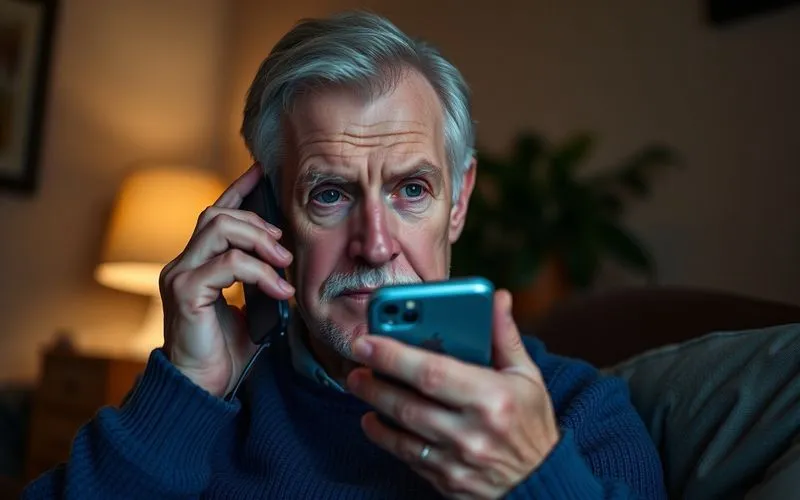
- Receiving frequent phone calls at unusual hours, or becoming agitated or upset during or after calls
- Purchasing gift cards in bulk — no legitimate organisation ever requests payment in gift cards
- Unexplained changes in legal documents — new powers of attorney, will amendments, or beneficiary changes
- Confusion about recent financial decisions — difficulty explaining where money went or what it was for
- Packages arriving from unknown senders — sometimes used in money-mule operations where victims unknowingly receive and forward stolen goods
Legal Powers of Attorney: A Critical Safeguard
One of the most effective protective measures is establishing a legal power of attorney (PoA) before a crisis occurs. Across EU member states, the specific legal frameworks vary, but the core concept is the same: a trusted family member or professional is granted the legal authority to make financial decisions on behalf of an older person, either immediately or when triggered by a medical assessment of diminished capacity.
Key considerations when setting up a power of attorney:
- Timing matters: A PoA must be established while the person still has mental capacity to grant it. Waiting until a diagnosis of dementia or after a scam has occurred may be too late.
- Choose the right type: A general PoA covers broad financial decisions, while a specific PoA can be limited to particular accounts or transactions. Many families opt for a "springing" PoA that only activates upon a certified assessment of incapacity.
- Use a qualified professional: Engage a notary or solicitor experienced in elder law. In most EU jurisdictions, a PoA must be notarised to be legally binding with financial institutions.
- Register it: In countries like Germany (Vorsorgevollmacht registered with the Bundesnotarkammer) and France (mandat de protection future), formal registration adds an extra layer of legal protection.
- Review regularly: Circumstances change. Review the PoA every two to three years and update it if the appointed person is no longer suitable or willing.
Bank Safeguards You Should Set Up Today
European banks have become increasingly aware of elder financial abuse and many now offer specific protective features. Contact your relative's bank and ask about the following:
- Transaction alerts: Set up SMS or email notifications for any transaction above a specified threshold, such as EUR 200. These alerts can be sent to both the account holder and a designated family member.
- Daily transfer limits: Reduce the maximum daily online transfer amount to a level appropriate for the person's normal spending. This limits the damage a scammer can do even if they gain access.
- Trusted contact designation: Under the EU's revised Payment Services Directive (PSD3), many banks now allow customers to designate a trusted contact person who can be reached if the bank suspects financial exploitation.
- Delayed large transfers: Some banks offer a cooling-off period for transfers above a certain amount, giving the customer (or their family) time to reconsider.
- Branch-level protocols: If your relative banks in person, speak with the branch manager. Many banks train staff to recognise signs of coercion or confusion in elderly customers making large withdrawals.
EU Consumer Protection for Vulnerable Adults
The European Union has been strengthening its consumer protection framework with particular attention to vulnerable populations. Several key instruments are relevant:
The Unfair Commercial Practices Directive (2005/29/EC) explicitly recognises that commercial practices targeting vulnerable consumers, including the elderly, can be deemed unfair even if they would not mislead an average consumer. This gives national enforcement authorities broader powers to pursue scammers who specifically prey on older adults.
The Consumer Rights Directive (2011/83/EU) provides a 14-day cooling-off period for contracts concluded at a distance or away from business premises. This can be a lifeline for seniors who have been pressured into signing up for unwanted services or products over the phone.
The European Consumer Centres Network (ECC-Net) offers free cross-border dispute resolution assistance, which is particularly relevant when scams originate in other EU member states. Each country has a national ECC office that can help file complaints and seek remedies.
Important: If you believe an elderly relative has been scammed, report it immediately to your national police, the bank involved, and your country's consumer protection authority. In many EU jurisdictions, quick action within 24 to 48 hours can result in frozen transactions and recovered funds.
How to Talk to Elderly Relatives About Scams
This is often the hardest part. No one wants to feel patronised or told they cannot manage their own affairs. A clumsy conversation can damage trust and make an older person less likely to seek help if they do encounter a scam. Here are principles that elder care specialists and fraud prevention organisations across Europe recommend:
- Normalise the topic: Frame it as something that affects everyone, not just older people. Mention that you yourself have received scam calls or emails recently. Share a news story about a scam to open the discussion naturally.
- Focus on the criminals, not the victim: Emphasise how sophisticated and professional scammers have become. Make it clear that falling for a scam is not a sign of stupidity but a testament to how convincing these operations are.
- Use concrete examples: Rather than vague warnings, describe specific scam scenarios they might encounter. "If someone calls and says they are from Microsoft and your computer has a virus, that is a scam. Microsoft never makes those calls."
- Establish a verification protocol: Agree on a simple system. For example: "If anyone asks you for money or personal information, please call me first so we can check it together. Even if they say it is urgent, there is always time to make one phone call."
- Repeat the conversation: A single discussion is not enough. Bring the topic up gently and regularly, perhaps every few months, sharing new examples or news stories each time.
- Respect autonomy: The goal is to empower your relative to recognise scams, not to take away their independence. Acknowledge their right to make their own decisions while making yourself available as a resource.
Practical Steps You Can Take Right Now
- Register their phone number on your country's do-not-call list (e.g., the Robinson List in Germany, Bloctel in France, the Telephone Preference Service in Ireland).
- Install a call-blocking app on their smartphone that filters known scam numbers. Many European telecoms providers also offer network-level scam call filtering at no extra cost.
- Enable two-factor authentication on their email and banking accounts. Use a method they are comfortable with, such as SMS codes rather than authenticator apps if that is simpler for them.
- Set their browser homepage to a trusted site and install an ad-blocker to reduce exposure to fraudulent advertisements and pop-up scams.
- Check their post regularly for unsolicited letters claiming prizes, inheritance notifications, or investment opportunities. These remain surprisingly common and effective.
- Accompany them to the bank for any large transaction and ensure branch staff know who to contact if they have concerns about unusual activity.
- Create a scam-reporting shortcut: Put the number for your national fraud hotline (e.g., 110 in Germany, 3018 in France, 0800 numbers in most EU states) in their phone as a saved contact labelled "Report Scam".
What to Do If Your Relative Has Already Been Scammed
If you discover that an elderly family member has fallen victim to a scam, act quickly but compassionately:
- Do not blame them. Shame only makes the situation worse and may prevent them from disclosing the full extent of what happened.
- Contact the bank immediately. Under EU payment regulations, banks have obligations to attempt recovery of fraudulent transfers. The sooner you act, the higher the chance of recovering funds.
- File a police report. This is essential for any future insurance claims or legal proceedings and contributes to national fraud statistics that drive policy changes.
- Report to the relevant consumer authority. In addition to police, contact your national consumer protection body and the European Anti-Fraud Office (OLAF) if the scam has cross-border elements.
- Secure their accounts. Change all passwords, enable additional security measures, and consider temporarily restricting online banking access if the threat is ongoing.
- Seek emotional support. Scam victimisation can trigger genuine psychological trauma. Many national victim support services in EU countries offer free counselling specifically for fraud victims.
Protecting elderly family members from financial scams is not about taking away their independence. It is about creating a support system where they feel confident asking questions, checking with someone they trust, and recognising the tactics that criminals use. The combination of practical safeguards, legal instruments, and open family communication forms the strongest possible defence against a threat that is only growing more sophisticated with each passing year.


Stay Informed
Get the latest safety insights delivered to your inbox.