The State of Home Security in Europe 2026
Home security in Europe has undergone a dramatic transformation over the past decade. What was once a market dominated by traditional alarm systems and mechanical locks has evolved into a sophisticated ecosystem of connected cameras, AI-driven threat detection, and integrated smart home platforms. As we move through 2026, the landscape looks markedly different from even just three years ago, shaped by new regulations, shifting crime patterns, and an accelerating adoption of technology across all EU member states.
This comprehensive report examines the current state of home security across Europe, drawing on the latest available data from Eurostat, national police forces, and industry bodies to give homeowners, renters, and property managers a clear picture of where things stand and what measures are proving most effective.
Burglary Statistics Across Europe: The 2025-2026 Picture
The overall trajectory of residential burglary in Europe has been downward since the mid-2010s, but the picture is far from uniform. According to Eurostat crime statistics updated through late 2025, the EU-27 recorded approximately 1.1 million reported domestic burglaries in 2025, a decline of roughly 12% from 2022 figures. However, several countries have seen worrying upticks that deserve attention.
The Nordic countries continue to post some of the lowest burglary rates in Europe. Denmark, Sweden, and Finland all report fewer than 300 burglaries per 100,000 households, thanks in part to high levels of community trust, effective policing, and widespread adoption of home security technology. By contrast, Southern European nations such as Greece, Italy, and parts of Spain continue to experience higher rates, particularly in urban centres and tourist-heavy coastal areas where seasonal population fluctuations create vulnerability windows.
France remains one of the most burglary-affected countries in Western Europe, with the Ministry of the Interior reporting approximately 205,000 residential break-ins in 2025. This figure, while lower than the 2019 peak of around 240,000, still represents a significant concern for French homeowners. The Paris metropolitan area, Marseille, and Lyon account for a disproportionate share of incidents.
Germany has seen a continued decline following the dramatic spike of 2015-2016. The BKA (Federal Criminal Police Office) recorded approximately 60,000 residential burglaries in 2025, less than half the peak figure. Analysts attribute this partly to improved border surveillance, partly to better home security measures, and partly to demographic shifts in criminal activity toward cybercrime.
Key finding: Across the EU, approximately 40% of burglaries now occur during daylight hours (between 10:00 and 16:00), a significant shift from the traditional pattern of nighttime break-ins. This underscores the importance of daytime security measures and the limitations of relying solely on darkness-activated lighting.
Smart Home Security: Adoption Rates and Market Growth
The European smart home security market has reached a turning point in 2026. According to Statista and the European Smart Home Association, smart security device penetration among EU households now stands at approximately 28%, up from 19% in 2023. This includes at least one connected security device such as a smart camera, video doorbell, smart lock, or connected alarm system.
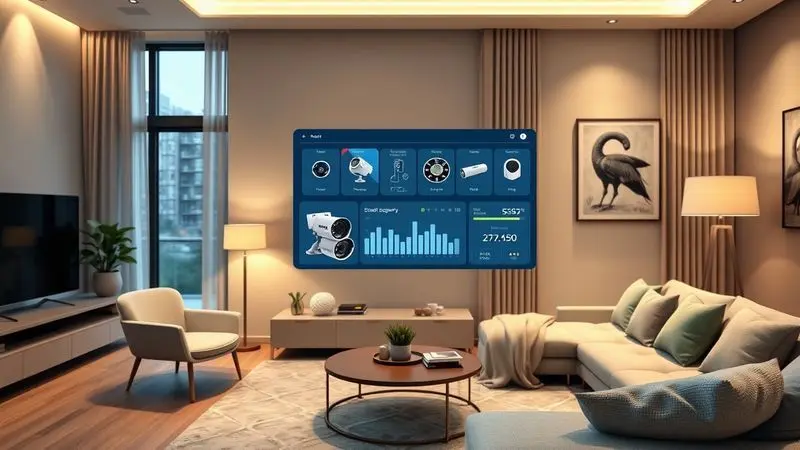
Country-by-country adoption varies considerably. The Netherlands leads with an estimated 38% smart security penetration, followed by the UK (which, while no longer in the EU, remains a key reference market) at 36%, Germany at 31%, and the Nordic countries averaging around 33%. Southern and Eastern European nations trail behind, with adoption rates ranging from 12% in Romania and Bulgaria to 22% in Spain and Portugal.
The growth drivers are clear: falling hardware prices, improved wireless connectivity (particularly the rollout of Matter and Thread protocols), and a new generation of homeowners who expect connected experiences. A basic outdoor camera system that cost over 500 EUR in 2020 can now be purchased for under 150 EUR with comparable or better features, including local storage options that address privacy concerns.
The Most Popular Smart Security Categories
- Video doorbells remain the entry point for most consumers, with Ring, Google Nest, and European brand Netatmo dominating the market. Approximately 16% of EU households now have one installed.
- Outdoor security cameras have seen explosive growth, with AI-powered person detection now standard even on budget models. Reolink, Eufy, and TP-Link Tapo are popular across the continent.
- Smart locks are growing fastest in the Nordics, where brands like Nuki, Danalock, and Yale Linus have strong market positions. EU-wide penetration is around 8%.
- Integrated alarm systems from providers like Ajax Systems (Ukraine-founded, now with major EU presence), Bosch Smart Home, and Somfy are replacing traditional monitored alarm panels.
- Window and door sensors linked to smartphone apps are the most affordable entry point, with Zigbee and Z-Wave sensors available for as little as 10-15 EUR each.
Comparing Security Approaches: What Actually Works?
Not all security measures are created equal. Research from the University of North Carolina at Charlotte (one of the most cited studies on burglar behaviour) found that visible security cameras and alarm systems are the most effective deterrents, with over 60% of convicted burglars stating they would avoid a property with visible cameras. European studies from the Netherlands Institute for the Study of Crime and Law Enforcement (NSCR) have produced similar findings.
Here is how the major categories of home security measures compare in terms of effectiveness based on available research and insurance industry data:
Physical Security: Still the Foundation
Despite the technology revolution, physical security remains the bedrock of home protection. Multi-point locking systems on doors, reinforced door frames, window locks, and security-rated glazing provide the first line of defence. The EN 1627 standard classifies resistance levels from RC1 (basic) to RC6 (high security), and most security professionals recommend at least RC2 for residential front doors. In the Netherlands, the Police Keurmerk Veilig Wonen (PKVW) scheme provides a comprehensive security certification for homes that has been shown to reduce burglary rates by up to 95% in certified dwellings.
Alarm Systems: Monitored vs. Self-Monitored
The traditional professionally monitored alarm system, where a central station receives alerts and dispatches security or contacts police, remains available but is increasingly competing with self-monitored systems. Professional monitoring typically costs between 20-50 EUR per month across Europe, while self-monitored systems have no ongoing fees beyond optional cloud storage subscriptions.
The effectiveness debate continues. Professional monitoring provides a guaranteed human response, but response times vary and false alarm rates remain problematic. Some police forces across Europe, notably in the UK and Germany, have deprioritised alarm responses due to false alarm rates exceeding 90%. Self-monitored systems put the homeowner in control but depend on the owner being available to respond to alerts.
AI and Video Analytics: The New Frontier
The most significant technological advance in home security during 2025-2026 has been the maturation of on-device AI for video analytics. Modern cameras can now distinguish between people, vehicles, animals, and environmental motion with remarkable accuracy, dramatically reducing false alerts. Some systems, like those from Deep Sentinel and Ajax Systems, combine AI detection with live human verification, creating a hybrid model that offers both speed and accuracy.
Facial recognition capabilities are available in consumer products but face significant regulatory scrutiny under the EU AI Act, which entered full application in August 2025. Residential use of facial recognition in security cameras occupies a legal grey area, and data protection authorities in several member states have issued guidance cautioning homeowners about capturing biometric data of visitors and passers-by.
Insurance Implications: How Security Affects Your Premiums
Home insurance across Europe increasingly reflects the security measures a homeowner has in place. In most EU markets, having a certified alarm system can reduce premiums by 5-15%, while a combination of physical security upgrades and electronic monitoring can yield discounts of up to 25%.
In France, most home insurance policies (assurance multirisque habitation) now explicitly require certain security measures for full coverage. Properties in high-risk zones may need to demonstrate EN-certified locks and an operational alarm system to avoid coverage exclusions. German insurers similarly differentiate based on VdS-certified security equipment.
A growing trend in 2026 is the integration of smart home security data with insurance. Several insurers, including Allianz, AXA, and Zurich, now offer or are piloting programmes where customers can share anonymised data from their smart security systems in exchange for premium reductions. This raises important privacy questions, but early adopters report savings of 10-20% on their annual premiums.
Regional Differences: Security Culture Across Europe
Home security culture varies enormously across Europe, shaped by everything from crime rates and housing types to cultural attitudes toward privacy and community.
Northern Europe: The Nordics and the Netherlands have the most mature security ecosystems, combining high-quality physical security standards with rapid technology adoption. The Dutch PKVW programme is widely regarded as the gold standard for residential security certification. In Sweden, the Stoldskyddsforeningen (Swedish Theft Prevention Association) plays a similar role in setting and enforcing standards.
Western Europe: France, Germany, Belgium, and Austria have strong traditions of physical security, with robust building codes requiring high-quality door and window fittings. Smart home adoption is growing rapidly but from a more cautious starting point, partly due to stronger privacy concerns around cameras and data collection.
Southern Europe: Italy, Spain, Greece, and Portugal face higher burglary rates on average, particularly in rural areas and holiday properties. Gated communities and physical barriers (walls, grilles, shutters) remain more common than electronic security. However, smart security adoption is accelerating, driven by affordable systems and mobile connectivity.
Eastern Europe: The fastest-growing market for smart home security, driven by increasing disposable incomes and the strong presence of Ajax Systems, which has become a regional champion. Poland, Czech Republic, and the Baltic states are seeing annual growth rates of 25-30% in smart security device sales.
Practical Recommendations for 2026
Based on the data and trends outlined above, here are actionable steps European homeowners should consider:
- Start with physical security. Ensure your front door meets at least EN 1627 RC2 standards. Reinforce the door frame and strike plate, and install multi-point locking. This single upgrade delivers the highest return on investment for security.
- Add visible deterrents. A visible camera system and alarm box are proven to deter opportunistic burglars. Even well-placed signage indicating a security system is present has measurable deterrent value.
- Choose a Matter-compatible ecosystem. As the smart home industry consolidates around the Matter standard, investing in compatible devices ensures long-term interoperability and avoids vendor lock-in.
- Review your insurance policy. Contact your insurer to understand what security measures qualify for premium reductions. The investment in certified equipment often pays for itself within two to three years through lower premiums.
- Consider a layered approach. The most effective security strategies combine physical barriers, electronic detection, visible deterrents, and good habits (locking doors, not advertising absences on social media).
- Stay informed about regulations. The EU AI Act and evolving GDPR interpretations affect how you can use cameras and facial recognition. Ensure your security cameras comply with local data protection requirements, particularly regarding filming public spaces or neighbouring properties.
Looking Ahead: Trends to Watch
Several emerging trends will shape home security in Europe over the next two to three years. Drone-based home surveillance, while still in regulatory limbo, is being piloted in gated communities in Spain and southern France. Battery-free sensors powered by energy harvesting are eliminating the maintenance burden of wireless security devices. And the integration of home security with neighbourhood-level platforms, similar to what Nextdoor and local WhatsApp groups already provide informally, is being formalised through municipal smart city programmes in cities like Amsterdam, Barcelona, and Copenhagen.
The state of home security in Europe in 2026 is one of rapid evolution. The tools available to homeowners have never been more powerful, more affordable, or more accessible. The challenge lies in navigating the options wisely, investing in measures that genuinely reduce risk, and staying compliant with the regulatory frameworks that protect everyone's privacy and rights.


Stay Informed
Get the latest safety insights delivered to your inbox.