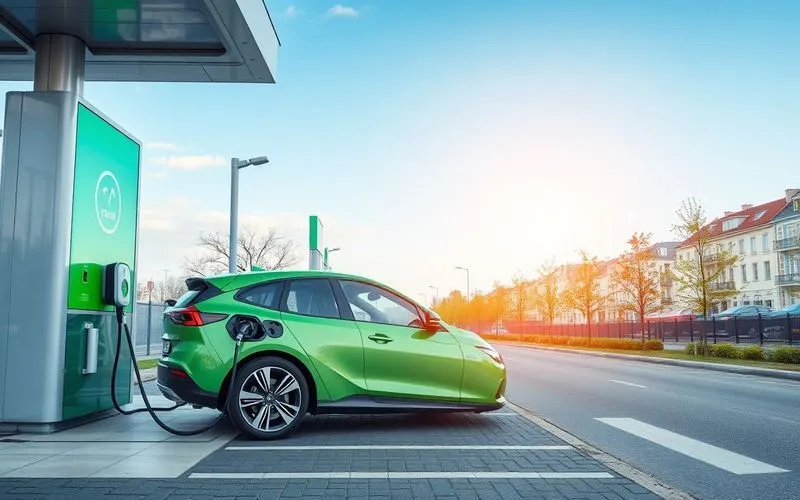
Electric Vehicle Safety: Charging, Battery Risks & EU Standards
Electric vehicle adoption across Europe has accelerated dramatically. By the end of 2025, over 15 million battery electric vehicles (BEVs) were registered across the EU, with EV market share exceeding 25% of all new car sales in several member states. This rapid transition brings enormous environmental benefits, but it also introduces safety considerations that are fundamentally different from those associated with traditional internal combustion engine vehicles.
From installing a home charging point safely to understanding what happens during a battery thermal event, and from navigating the EU's evolving regulatory framework to managing your EV through a harsh Nordic winter, this guide provides the practical knowledge every European EV owner and prospective buyer needs.
Home Charging Installation Safety
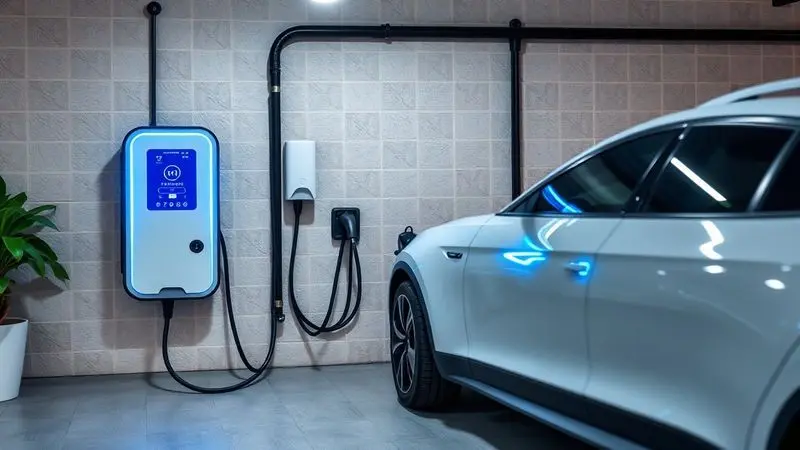
The vast majority of EV charging happens at home, typically overnight. While this is convenient, a home charging installation must be treated as a significant electrical upgrade to your property, not a simple plug-and-play addition.
Never Use a Standard Domestic Socket for Regular Charging
Every EV comes with a portable charger (sometimes called a granny cable) that plugs into a standard household socket. While this can work in an emergency, standard domestic sockets across Europe are rated for intermittent use and are not designed to sustain the continuous high current draw that EV charging requires for hours at a stretch. A standard Schuko socket is rated at 16A, but the wiring behind it, the contact quality, and the age of the installation may not safely support sustained draws at or near that limit. Overheating, melted sockets, and house fires have been documented across multiple EU countries when owners relied on domestic sockets for daily charging.
Essential: Always install a dedicated EV wallbox charger. This is not optional for regular home charging. It is a fundamental safety requirement.
Wallbox Installation Requirements
A properly installed home wallbox ensures safe, efficient charging. Key requirements that apply across most EU jurisdictions include:
- Qualified installer: The installation must be carried out by a certified electrician. In many EU countries, there are specific EV charger installer certifications (e.g., OLEV-approved in the UK's legacy scheme, or equivalent national schemes in Germany, France, and the Netherlands).
- Dedicated circuit: The wallbox must be on its own dedicated circuit from the consumer unit (fuse box), with appropriately rated cabling. A typical 7.4 kW single-phase wallbox requires a 32A circuit with 6mm2 cable, though distances and installation conditions may require larger cross-sections.
- RCD protection: A Type A or Type B Residual Current Device (RCD) is mandatory. Many modern wallboxes include a built-in Type A RCD with DC fault detection (6mA), but your electrician must verify compatibility with your existing consumer unit protection.
- PME earthing considerations: In properties with PME (Protective Multiple Earthing) systems, additional earth electrode installation may be required for outdoor charging installations to protect against the specific risk of a lost neutral condition.
- Load management: If your property's electrical supply is limited (common in older European buildings), a smart wallbox with dynamic load management can automatically adjust charging current to prevent overloading the main supply.
Public Charging Station Security
Europe's public charging network has expanded rapidly, with over 600,000 public charge points now operational across the EU. While the physical safety standards for public chargers are robust, there are security considerations that users should be aware of.
Payment and Data Security
Public charging stations increasingly accept contactless card payment, but many still use QR codes or require downloading a specific app and creating an account. This creates potential attack surfaces:
- QR code fraud: Criminals have been documented placing fake QR code stickers over legitimate ones on charging stations across France, Germany, and the Netherlands. When scanned, these redirect users to convincing but fraudulent payment pages that harvest credit card details. Always verify that a QR code appears to be original to the charger and not a sticker placed on top.
- App security: If you use charging network apps, ensure they are downloaded from official app stores, keep them updated, and use strong unique passwords. Compromised charging accounts have been used to charge vehicles fraudulently.
- RFID card cloning: Some charging networks use RFID cards for authentication. While modern cards use encrypted communication, older systems may be vulnerable to cloning. Contact your provider to ensure you have a current-generation card.
Physical Safety at Public Chargers
Always inspect the charging cable and connector before use. Look for visible damage, exposed wiring, burn marks, or a cable that feels excessively warm. Report damaged equipment to the network operator. At DC fast chargers, be aware that the cable can become warm during high-power charging sessions; this is normal, but it should never be hot to the touch. Never attempt to unplug a charger during an active high-power session without using the stop button on the charger or your vehicle first.
Battery Thermal Runaway: Understanding the Risk
Battery thermal runaway is the most serious safety concern specific to electric vehicles. It occurs when a lithium-ion battery cell enters an uncontrollable self-heating state, reaching temperatures above 400 degrees Celsius and potentially causing fire or explosion. While extremely rare in modern EVs thanks to sophisticated battery management systems, understanding this phenomenon is important.
What Causes Thermal Runaway?
- Physical damage: A severe collision that penetrates or deforms the battery pack can damage individual cells, leading to internal short circuits. Modern EVs are designed with the battery protected within the vehicle's crash structure, but extreme impacts can still compromise it.
- Manufacturing defects: Microscopic impurities or defects in cell manufacturing can create internal weak points that may fail over time. This is the primary driver of battery-related vehicle recalls.
- Overcharging or deep discharge: The battery management system (BMS) prevents this under normal circumstances, but a BMS failure combined with a charging fault could theoretically lead to cell damage.
- External heat exposure: Prolonged exposure to extreme external temperatures, such as a neighbouring vehicle fire, can overwhelm the battery's thermal management system.
What to Do If an EV Battery Catches Fire
An EV battery fire behaves differently from a conventional vehicle fire, and knowing the correct response can be life-saving:
- Evacuate immediately: Get all occupants out of the vehicle and at least 30 metres away. Battery fires can produce toxic fumes including hydrogen fluoride.
- Call emergency services: Dial 112 (the EU-wide emergency number) and specifically inform them that it is an electric vehicle fire. Fire services across Europe are increasingly trained and equipped for EV fires, but they need to know what they are responding to.
- Do not attempt to extinguish it yourself: An EV battery fire cannot be effectively suppressed with a standard car fire extinguisher. It requires massive quantities of water (typically 10,000 to 40,000 litres) applied continuously over an extended period, or submersion of the vehicle in a water container, a technique that several European fire services have adopted.
- Be aware of re-ignition: One of the distinctive dangers of battery fires is that they can re-ignite hours or even days after the initial fire appears to be extinguished. This is why fire services often quarantine EV fire vehicles in open areas or water-filled containers for 24 to 48 hours.
Perspective on risk: Studies by the Swedish Civil Contingencies Agency (MSB) and data from the European Automobile Manufacturers' Association (ACEA) consistently show that EVs are significantly less likely to catch fire than petrol or diesel vehicles. The risk, while real, should not be overstated.
EU Type Approval Standards: R100 and R136
Every electric vehicle sold in the EU must comply with rigorous type approval standards that specifically address electrical and battery safety. The two most important regulations are UNECE R100 and UNECE R136.
UNECE Regulation No. 100
R100 is the foundational regulation governing the safety of electric power train components in vehicles. It covers:
- Electrical safety: Protection against electric shock, including insulation resistance requirements, high-voltage disconnection in the event of a crash, and protection of high-voltage components from direct and indirect contact.
- Battery safety testing: Rechargeable Energy Storage Systems (REESS) must pass a series of abuse tests including vibration, thermal cycling, mechanical shock, fire resistance, external short circuit, overcharge, and over-discharge tests.
- Hydrogen emission limits: During charging, some battery chemistries can emit small quantities of hydrogen gas. R100 sets limits to ensure these remain well below flammable concentrations in enclosed spaces like garages.
- Post-crash safety: After a collision, the regulation mandates automatic disconnection of the high-voltage system, limits residual voltage in the system, and requires that the battery remains contained within the vehicle structure.
UNECE Regulation No. 136
R136 is a newer regulation specifically addressing the safety of large lithium-ion battery systems. It was developed in response to the growing size of EV battery packs and introduces additional requirements beyond R100:
- Thermal propagation resistance: If a single cell within the battery pack enters thermal runaway, the pack must be designed to either prevent propagation to adjacent cells or provide at least five minutes of warning before any external effect (fire, explosion, or toxic gas release) that could endanger occupants. This five-minute window is critical, as it gives occupants time to evacuate.
- Enhanced abuse testing: R136 includes more stringent mechanical and thermal abuse tests that better reflect real-world accident scenarios.
- Monitoring requirements: The BMS must continuously monitor for conditions that could lead to thermal runaway and alert the driver through clear, unambiguous warnings.
Charging Cable Ratings and Safety
Not all charging cables are created equal, and using the wrong cable or a substandard product can create genuine safety hazards.
- Mode 2 cables (portable/granny cables): These are the cables supplied with the vehicle for emergency use with a domestic socket. They include an in-cable control and protection device (IC-CPD) that monitors for faults. Use only the cable supplied with your vehicle or a replacement from a reputable manufacturer that complies with IEC 62752. Counterfeit Mode 2 cables sold through online marketplaces have been identified as a growing safety concern by consumer protection authorities in Germany, France, and Italy.
- Mode 3 cables (wallbox to vehicle): These connect your vehicle to a dedicated charging station using a Type 2 connector (the standard across Europe). They are rated for continuous duty and should comply with IEC 62196. Check the cable's rated current (typically 16A or 32A for single-phase, up to 63A for three-phase) and ensure it matches your wallbox's capability.
- Cable condition: Inspect your charging cable regularly for damage, particularly at the connector ends and any point where it might be bent, pinched, or run over. A damaged cable should be replaced immediately, never repaired with tape or other makeshift solutions.
Cold Weather Battery Management
European winters present specific challenges for EV owners. Lithium-ion batteries are sensitive to cold temperatures, and understanding how to manage your vehicle in winter conditions is important for both safety and battery longevity.
How Cold Affects Your EV Battery
When ambient temperatures drop below approximately 5 degrees Celsius, the electrochemical processes within lithium-ion cells slow down. This has several practical effects:
- Reduced range: Expect 20% to 40% less range in cold weather compared to optimal conditions. This is due to both reduced battery efficiency and the energy consumed by cabin heating.
- Slower charging: The battery management system will limit charging speed when the battery is cold to prevent lithium plating, a condition where lithium metal deposits on the cell's anode rather than intercalating properly. Lithium plating permanently damages the cell and can create internal short circuit risks. This is why preconditioning the battery before fast charging is so important.
- Reduced regenerative braking: When the battery is very cold, the BMS may reduce or temporarily disable regenerative braking because the battery cannot safely accept the charge. This means your braking feel will change, and you may need more conventional brake input. Most modern EVs display a notification when this occurs.
Winter Safety Tips for EV Owners
- Precondition while plugged in: Use your vehicle's preconditioning feature to warm both the cabin and the battery while the car is still connected to the charger. This uses grid power rather than battery power, preserving range and bringing the battery to an optimal operating temperature.
- Use a heat pump: If your EV is equipped with a heat pump (increasingly standard in European-market EVs), it will be significantly more efficient at cabin heating than a resistive heater. If you are purchasing a new EV and live in a cold climate, this feature should be a priority.
- Plan routes with charging stops: In winter, build in more generous margins when planning long journeys. Factor in the reduced range, potentially slower charging speeds at cold chargers, and the possibility that some charging stations may be out of service due to weather conditions.
- Keep the battery above 20%: In very cold conditions, avoid letting the battery state of charge drop below 20%. Low charge combined with extreme cold increases the risk of deep discharge damage and may leave you unable to start the vehicle.
- Park indoors when possible: A garage, even an unheated one, provides meaningful thermal protection compared to parking outdoors. The battery will stay warmer, charge faster, and deliver better range in the morning.
- Check tyre pressures more frequently: Cold weather causes tyre pressures to drop. EVs are typically heavier than equivalent ICE vehicles due to the battery, making correct tyre pressure even more important for safety and efficiency.
Garage Charging Safety
If you charge your EV in a garage, whether attached or detached, there are additional safety considerations:
- Fire detection: Install a heat detector (not a standard smoke detector, which may give false alarms from exhaust fumes or dust) in your garage. Ideally, connect it to your home's fire alarm system so you are alerted if a fire starts during overnight charging.
- Ventilation: While modern EVs do not produce carbon monoxide, adequate ventilation in the garage is still advisable to dissipate any hydrogen gas that may be emitted during charging and to prevent heat buildup.
- Clear the area around the charger: Keep the area around your wallbox and charging cable free from flammable materials, stored chemicals, and clutter. Maintain at least one metre of clearance.
- Automatic fire suppression: For attached garages, consider installing an automatic fire suppression system. Several European manufacturers offer compact, self-activating systems specifically designed for residential garages.
Electric vehicles represent a major step forward in automotive safety and environmental responsibility. The risks they present are real but manageable, and in most respects they are statistically safer than their petrol and diesel counterparts. By ensuring your home charging installation is professionally fitted, understanding the basics of battery safety, staying informed about EU regulatory standards, and adapting your habits for cold weather operation, you can enjoy the benefits of electric mobility with full confidence in your safety.


Stay Informed
Get the latest safety insights delivered to your inbox.